Top 10 Best SEO Experts in Calicut (Kozhikode) – 2026 Guide
Jun 17, 2026



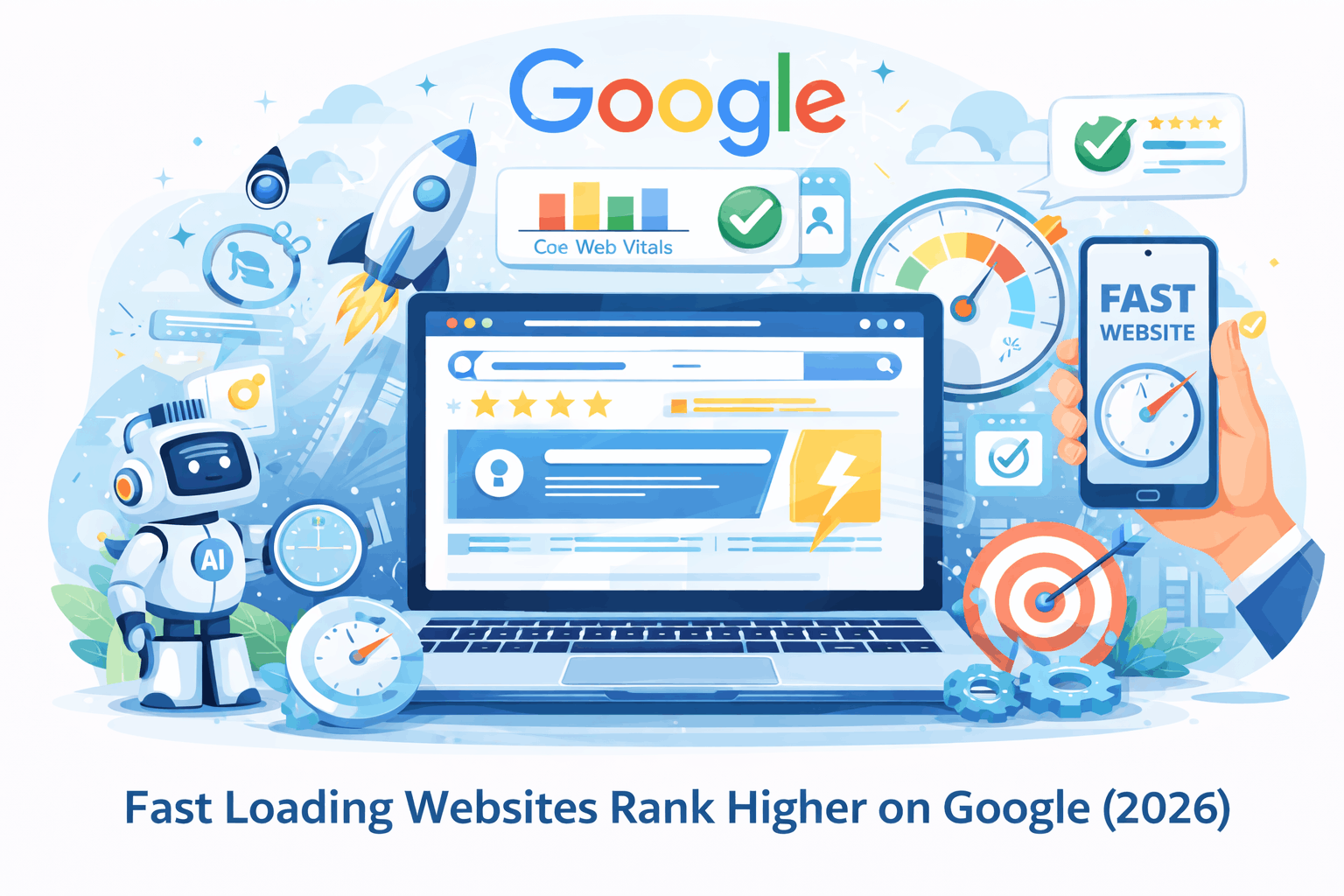
Website speed is no longer just a technical feature — it is a major Google ranking factor in 2026. Fast-loading websites improve user experience, increase conversions, and help businesses appear higher in search results. With AI-driven search and answer engines becoming more advanced, page speed directly impacts how your content is discovered and recommended.
In this guide, we explain why fast websites rank better on Google and how you can improve your website performance.
Website speed refers to how quickly your web pages load when a visitor opens your site. Search engines measure this using Core Web Vitals, which analyze loading time, visual stability, and responsiveness.
A fast-loading website reduces bounce rate, improves user experience, and signals quality to Google — which helps your pages rank higher.
Google prioritizes websites that deliver a smooth and fast experience. If a website loads slowly, users leave quickly, and Google sees this as a negative signal.
Better Core Web Vitals scores
Lower bounce rate
Higher engagement time
Improved mobile performance
Stronger SEO signals
Fast websites are also more likely to appear in AI-powered search results and featured snippets.
In 2026, people expect websites to load within seconds. A delay of even 2–3 seconds can cause visitors to leave your site.
When your website loads quickly:
Users trust your brand more
Navigation feels smoother
Visitors stay longer
Conversion rates increase
Google’s algorithms focus heavily on real user experience, making speed optimization essential.
Generative Engine Optimization (GEO) and Answer Engine Optimization (AEO) rely on clear, fast-accessible content. AI tools prefer websites that load quickly because:
Content is easier to crawl and process
Structured information loads faster
AI can extract answers more efficiently
A fast website increases the chance of your content appearing in AI summaries and voice search results.
Here are practical tips businesses can implement:
Use compressed images and modern formats like WebP to reduce loading time.
Avoid heavy animations and unnecessary scripts.
Caching stores files locally, making repeat visits faster.
Reliable hosting improves server response time.
Most searches come from mobile devices, so responsive design is critical.
Pages take more than 3 seconds to load
Visitors leave quickly
Low engagement or conversion rates
Poor Google PageSpeed score
If you notice these issues, your SEO performance may be affected.
Yes. Google considers page speed and Core Web Vitals as ranking factors. Faster websites provide better user experience and rank higher.
Ideally, your website should load within 1–2 seconds for the best performance.
Optimize images, reduce plugins, use fast hosting, and ensure mobile-friendly design.
Yes. Fast websites improve engagement and help local businesses rank better in regional search results.
In 2026, website speed is one of the most important factors for SEO & Website Development success. Businesses that invest in faster, optimized websites gain a strong advantage in Google rankings, AI search visibility, and user engagement.
A fast website is not just a technical upgrade — it is a smart strategy for long-term digital growth.
Boost your business visibility and revenue today!